
We’ve covered the etymology and the history – now let’s get practical. Time to track the evolution of this brilliant category and figure out how to throw together a proper punch today. Call it the punch algorithm. Let’s go.
As you remember from Part 1, the first recorded punch recipe dates back to 1638, when Johan Albert de Mandelslo wrote about his factory workers in India drinking a mix of aquavit, rosewater, citrus juice, and sugar.
Of course, aquavit, as we know it now, didn’t even exist in India back then. That’s why the earliest punches were based on arrack. (Not the lovely anise bomb you know today, but just rough homemade spirit from whatever was around.)
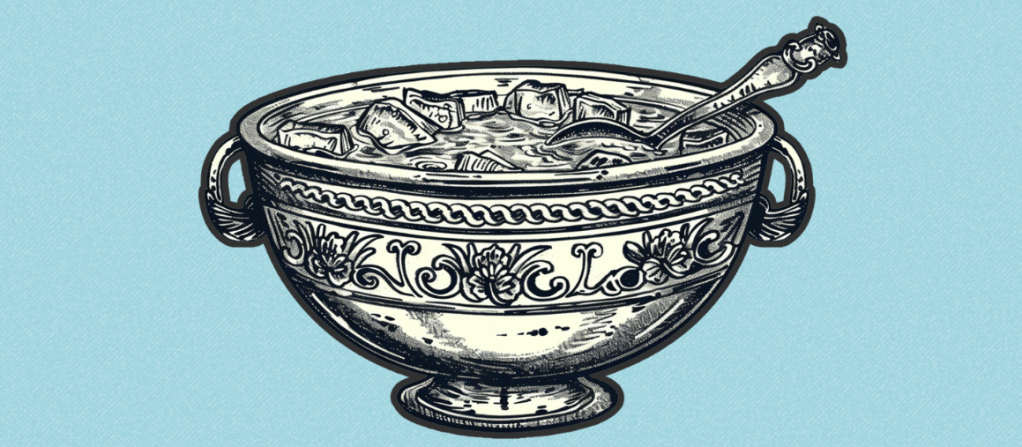
Sadly, the exact first recipe is lost, but we do have a fresher one – the 1694 “Bombay Presidency Punch.” Popular among colonial officials in India, it had quite the reputation. One governor of the time wrote, “The usual effect of this damned punch is that men drink it until blackout, then quarrel, and end up disgracing our nation and religion.” Not a glowing Yelp review.
Fun fact: if the punch bowl wasn’t stamped by the seller, you could smash it and avoid paying for either the bowl or the punch.
Bombay Presidency Punch (1694):
- Arrack – 120–150 ml
- Sugar — 0.5 pound (~226 g)
- Lime juice – 300 ml
Water isn’t listed, but trust me – they were adding two parts water for every one part booze. Oh, and it was garnished with a salted biscuit. Don’t ask.
Once punch crossed into England, things changed. Arrack was borderline undrinkable, so people started swapping it out for rum, brandy, or the awful gin of that era.
Why rum? Easy:
- Rum was dirt cheap (a pint cost less than beer).
- Rum was terrible straight, so mixing was essential.
- There was a lot of rum.
Arrack punch soon morphed into “punch with a little arrack.” By 1824, Jerry Thomas (aka The Professor) was already publishing recipes like this one:
Very Pretty Three Tumblers of Arrack Punch (1824):
- Rum – 480 ml
- Arrack – 720 ml
- Sugar to taste (yes, that’s literally the instruction)
- Juice of two lemons
- Water – 1440 ml
Thomas suggests doubling the water if you fear a hangover. He, of course, did not.
Right after, he drops United Service Punch, a recipe much closer to what we’d call a proper punch today:
United Service Punch:
- Hot tea – 1200 ml
- Sugar – 340 g
- Zest of 4 lemons
- Juice of 8 lemons
- Arrack – 600 ml
This one actually looks like a full drink – with spice, dilution, balance. Originally hot, but toss in ice and it works just as well.
By the 18th century, milk punch entered the game. A recipe found in 1711 by Montague Summers (rediscovered in 1914) shows just how old this “modern classic” really is:
Mary Rockett’s Milk Punch (1711):
- Zest of 8 lemons
- Brandy – 4800 ml
- Water – 5000 ml
- Sugar – 900 g
- Juice of 8 lemons
- Fresh milk – 2000 ml
- 2 nutmegs
Infuse zest in brandy for two days, then add the rest, pour in the milk, and let it curdle. Strain through flannel (hello, Superbag). Bottle it, chill it, forget about it for centuries, because nothing gonna happens with this liquid.
And of course, we can’t ignore the Fish House Punch – America’s foundational contribution:
Fish House Punch:
- Lemon or lime juice – 600 ml
- Jamaican rum – 900 ml
- Cognac – 450 ml
- Peach brandy (sub Applejack + peach liqueur, 3:1) – 450 ml
- Water – 6000 ml
- Sugar – 1800 g
From there, the styles exploded – orange punches, whiskey punches, gin punches, even versions made with water shipped from the Thames (seriously).
Wrap-up:
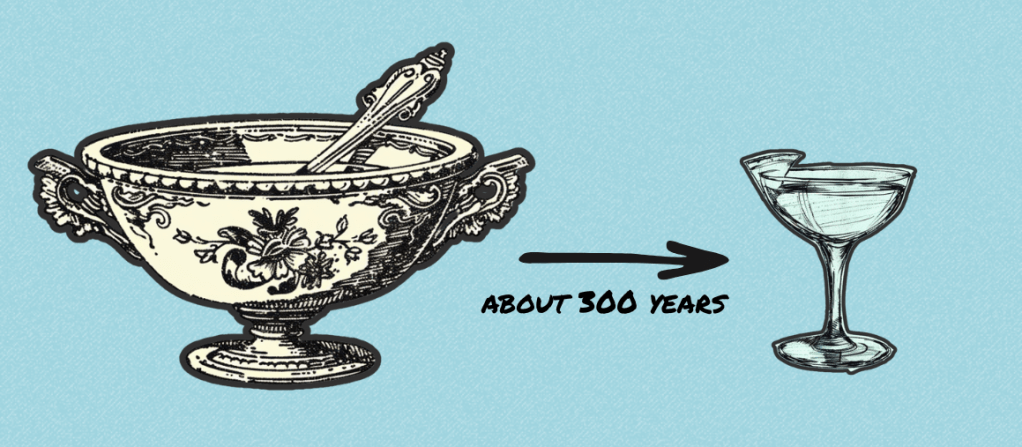
But history moving forward and industrialisation sped up life. Nobody had hours to sit around a single bowl anymore, and cocktails stole the punch’s crown. But milk punch lives on in almost every cocktail bar today, and punch bowls still come out – either beautifully prepped, or thrown together in a panic.
In next article we are giving you some examples of how you can build punch nowadays.
If you find our project valuable and useful – support us with a subscription.
Stay boozy, stay nerds

Leave a comment